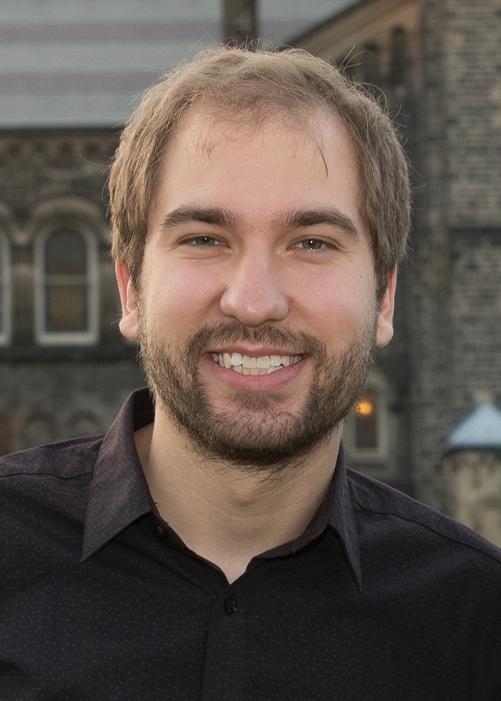
person Melkior Ornik
work Assistant Professor in AE, UIUC
calendar_month December 5, 2025
schedule 11:15 am – 12:15 pm
pin_drop Montgomery Knight 317
Autonomy at the Frontier: Limited Resources, Complex Missions, Treacherous Environments
Abstract
Fast, successful, and efficient planning is a core challenge of high-level autonomy in complex environments. The obstacles are seemingly insurmountable. Individual agents often face constraints in terms of resource and compute availability, limited sensing and communication capabilities, and lack of a priori knowledge about the operating environment. Planning for large teams is burdened by either curse of dimensionality or complex organizational patterns of decentralization. As a result, standard machine learning methods, let alone standard methods of control theory, are largely infeasible, while human-driven solutions or simple heuristics often produce vastly suboptimal plans. The purpose of this talk is to propose a middle road. We will consider three broad problems in planning: resource-constrained teams, task-aware data collection, and time-optimal planning with imperfect knowledge of environment and dynamics. Using two disparate and challenging domains — infrastructure maintenance and maritime autonomy — we show that understanding the structure of agent interactions and the interplay between environment and mission progress is key in developing meaningful, computationally tractable policies. Consequently, our strategies combine methods of optimal planning and machine learning with high-level structure-driven abstraction and mission decomposition. Early empirical work demonstrates that such an approach greatly outperforms existing benchmarks while retaining the capability to operate at impressively large scales.
Biography
Melkior Ornik is an Assistant Professor in the Department of Aerospace Engineering at the University of Illinois Urbana-Champaign, also affiliated with the Coordinated Science Laboratory and the Department of Electrical and Computer Engineering, as well as the Discovery Partners Institute in Chicago. He received his Ph.D. degree from the University of Toronto in 2017. His research focuses on developing theory and algorithms for control, learning and task planning in autonomous systems that operate in uncertain, changing, or adversarial environments, as well as in scenarios where only limited knowledge of the system is available. He is a senior member of IEEE and AIAA, his recent work has been extensively funded by the US federal government grants, and he has been selected for both Air Force and Office of Naval Research Young Investigator Program awards.