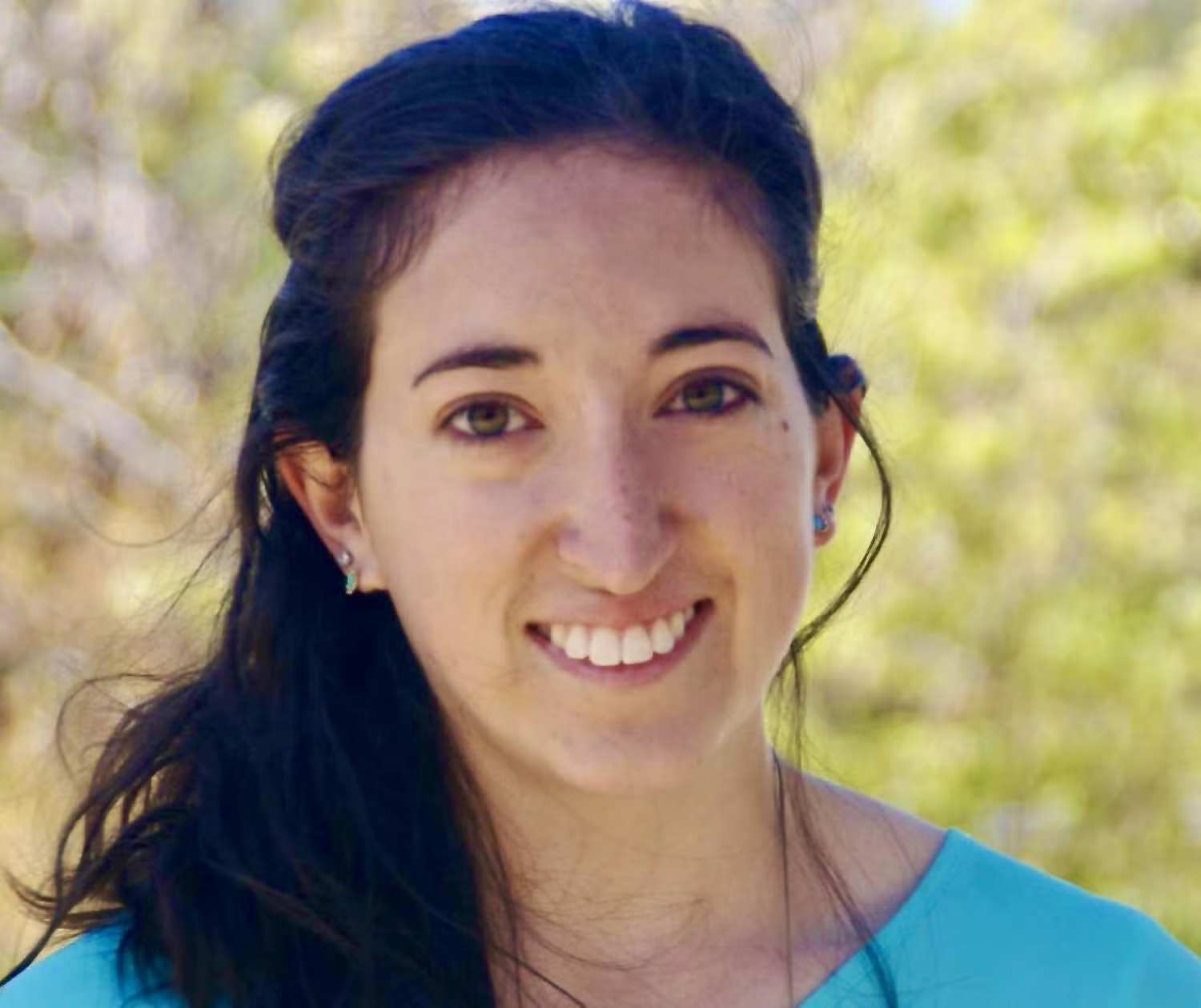
person Cara Welker
work Assistant Professor, Mechanical Engineering and Biomedical Engineering, University of Colorado Boulder
calendar_month January 26, 2026
schedule Postponed due to weather
pin_drop Postponed due to weather
(Hosted by DCL)
Human and Data Informed Approaches for Lower-limb Powered Prosthesis Control
Note! This seminar will be rescheduled to a later date in the semester due to the winter storm and campus closure on January 26th. More info to come.
Abstract
While lower-limb powered prostheses have shown some promise in improving functional movement outcomes for those with amputation, results are inconsistent among different users, device control is typically only optimized for steady-state motion, and standard approaches to tune these controllers for different individuals are done heuristically. To achieve a fully integrated human-prosthesis system, both the human and the prosthesis need to receive inputs from each other and adjust their behavior accordingly. In this talk, Prof. Welker will present her work to inform and implement this goal in powered prosthesis controllers. First, she will discuss how phase-based impedance control can reduce the burden of parameter tuning and enable effective steady-state and non-steady state activities. Next, she will discuss a machine learning approach to quantify how overall movement outcomes are affected by individual biomechanical factors, which could inform new device training or controller inputs. Finally, Prof. Welker will discuss novel ways that the human user can be more fully incorporated in-the-loop in prosthesis feedback and control. Ultimately, these approaches work towards achieving a more integrated human-prosthesis system to improve movement outcomes for those with amputation.
Biography
Dr. Welker’s research focuses on developing effective assistive devices that assist those with movement impairments or augment everyday movement in the healthy population to reduce fatigue or injury. She uses an interdisciplinary approach combining expertise in biomechanics, haptics, and robotics in order to provide a greater understanding of the entire human-device system, with research spanning from the development of novel devices, control strategies, forms of sensory augmentation, and design of human subject experiments that provide further insight to the human neuromusculoskeletal system.